The short answer: when a big job lands before the money does, work out exactly how much cash the job needs before the first payment comes in, then match it with the right kind of funding before you start, not halfway through. Winning more work is a good problem to have, but it can squeeze your cash flow harder than a quiet month.
The scenario
You have just won the biggest contract of the year. Maybe it is a fit out across three sites, a civil job that runs into the new year, or a builder who wants you on two projects at once. It is exactly the work you have been chasing.
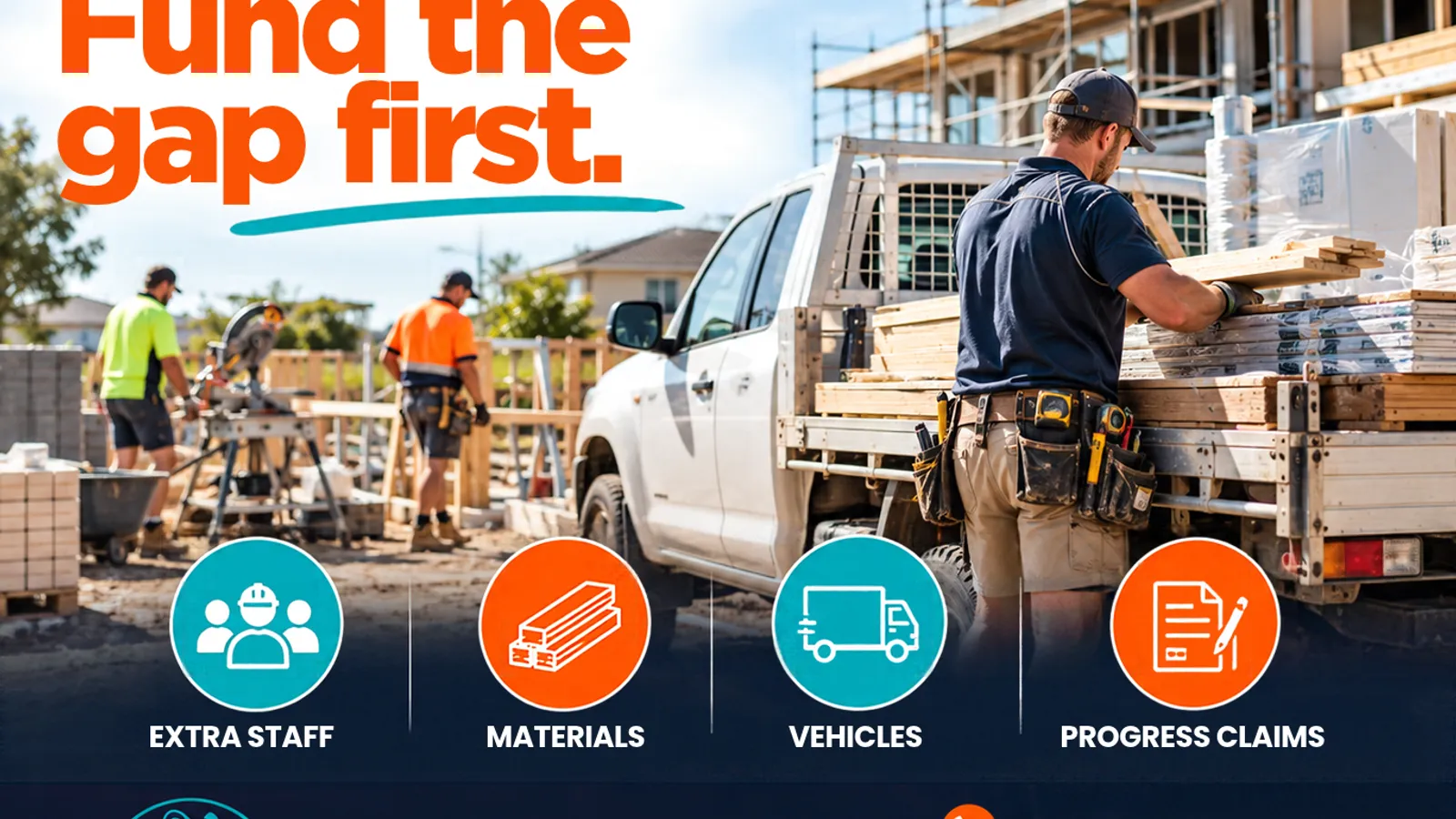
Then the maths hits. You need to order materials now. You need another ute and someone else on the tools. Your supplier wants their account cleared within the month, and your customer pays progress claims weeks after you invoice. For a stretch of weeks, money goes out every Friday and nothing comes back in.
The business is not in trouble. It is growing, and growth costs money before it pays money. The owners who handle it well are the ones who plan for that gap before they sign, not the ones who find it in their bank account three weeks in.
How to fund the gap, step by step
- Map the job, not just the business. Take the contract on its own. List every cost you will carry before the first payment arrives: materials, hire, extra wages and super, fuel, any new vehicle or equipment, and the supplier accounts that fall due. Then write down when each progress payment is realistically likely to land, based on how this customer has paid before.
- Find the low point. Line the costs and payments up week by week. Somewhere in there is the week your account goes lowest. That figure, plus a sensible buffer, is roughly what you need to cover. It is often less than owners fear, and sometimes more than they hoped.
- Split one off costs from running costs. A new ute, trailer or machine is something you will keep using long after this job finishes. Running costs like wages and materials are used up on the job. These are usually funded differently, and mixing them up is where cash gets tied up.
- Match each cost with the right tool. For a vehicle or machine, equipment finance spreads the cost over the working life of the asset, so the cash in your account stays available for the job. For running costs, the options can include a business line of credit you draw on only when you need it, invoice finance that pays you a large part of an invoice now instead of waiting for the customer, or a short term business loan for a set amount. Each has its own fees, terms and conditions, and suits a different situation. This is the part worth talking through with your broker and your accountant rather than picking whatever turns up in an ad.
- Get it approved before you start. Funding is easiest to arrange when your recent bank statements look healthy and you are not under pressure. With lenders slowing down over Christmas, anything you want in place for January is worth starting now.
In my last article, How Do You Keep Cash Flow Covered Over the Christmas Shutdown?, I covered the seasonal gap every business faces over the break. A big new contract is a different gap, because it is tied to one job and it can arrive at any time of year.
Common mistakes
Paying cash for the ute and running short on wages. It feels responsible to pay outright, but if it leaves the account too thin for the next few weeks of payroll, the job ends up funded by stress instead.
Forgetting what the customer's payment terms really mean. The payment term in the contract often stretches out by the time a claim is approved and paid. Plan on how this customer actually pays, not how the contract says they will.
Using the GST and tax money to fund the job. GST you have collected is not working capital. If it gets spent on materials, the BAS bill arrives right when the account is lowest.
Waiting until you are already stretched. Once repayments are being missed or the account is regularly overdrawn, there are fewer options and they tend to cost more. Have the conversation when the contract is signed, not when the first supplier calls.
Not thinking about rates. The Reserve Bank lifted the cash rate again on 3 November, to 4.85 per cent. Whatever funding you use, look at the total cost over the life of the facility, not just the headline rate, and ask your accountant how it fits with the rest of your numbers.
What to have ready
If you want to line up funding for a new contract, having these on hand will speed things up:
- Your ABN and how long you have been trading.
- Your recent business bank statements, usually the last few months.
- Your latest BAS, or financials if you have them.
- A copy of the contract or purchase order, including the payment terms.
- Your week by week map of costs and payments for the job.
- Details of any vehicle or equipment you need, such as a quote or the listing if you are buying privately.
- A list of your current loans, leases and their repayments.
Every lender looks at things differently, and what fits depends on your business, your trading history and the job itself.
Let's look at the numbers together
If you have just won the work and you are wondering how to carry it until the money comes in, give me a call before you order the materials. I will go through the job with you, explain the options in plain English, and tell you straight what I think is realistic. Book a call with Wade through the Tigris Finance website, or call 07 2139 4073.
General information only. This article does not take into account your objectives, financial situation or needs. Consider whether it is appropriate for you and seek advice before acting on it. Any finance is subject to lender assessment, fees and conditions.
This article is general information only. It does not take your objectives, financial situation or needs into account and is not credit advice. Talk to us about your own circumstances before making a finance decision.